3.15.2007

Throwing Muses: The Real Ramona

Mike Johnston: Throwing Muses' untitled first album (left), which I have on vinyl and CD, has had a furtive history. The band was the first American group signed to the then-white-hot English label 4AD, and Kristin Hersh's songwriting, like Monk's piano-playing, arrived fully formed (as a friend once put it, "she's an 'is-type' artist, not a 'growth-type' artist"). The album was arguably the most seismically significant debut since Dylan's—genuinely life-changing for many people, many of whom were women. But it was never released in America—has not been to this day, although you can find all ten of its songs on a Rykodisk archive CD called In A Doghouse, grouped with an early EP and some demo tapes once famous as bootlegs, in murky, bottom-of-a-[wishing]-well sound.

That sort of thing is fine with "just music," but great albums are holistic artistic creations that deserve to be respected as having an intended sequence and arc, a defined beginning and end. To have the untitled debut relegated to such treatment (while better, I suppose, than if it were not available at all)—well, it's a tawdry fate for a record that ought to be celebrated as one of the artistic high points of the 1980s.
Throwing Muses as first constituted, in a 1986 4AD promo photograph. Drummer
David Narcizo, Kristin Hersh, Tanya Donelly, and bassist Leslie Langston.


Despite my appreciation for the first album, I eventually drifted away from the band. Nothing could match the vivid intensity of the emotions on the first album and, starting at about Red Heaven in 1992, Hersh's high-frequency hearing had obviously started to go, and consequently the recordings are loaded with so much excess high-frequency energy that they verge on painful on anything but an old silver-faced receiver with tone controls. The Curse hurts my ears—it makes me yearn for earplugs even at moderate volumes—and Hersh's almost unlistenably shrill solo record Hips and Makers was the last thing of hers I bought, although I admit I feel guilty about it sometimes. My respect for her and her songwriting has never abated.

I also think I respond to the Lennon/McCartneyesque dual-personality interplay of Hersh and her stepsister Tanya Donelly in the band's early days, and just plain miss it in the later albums. Donelly was tagged as being more of a "pop" influence than the angrier, more raw-edged, mentally tainted Hersh, and perhaps that's true in the superficial way of most such generalizations. But although the two couldn't get along in the end—Donelly had already formed The Breeders with The Pixies' Kim Deal by 1988 as a side project—their powerful synergy and complementary push-and-pull (and perhaps their interpersonal friction, too) gave the band's early projects a compelling, lively volatility.

Tanya today (2006)

Which brings me around to The Real Ramona. Recorded in 1991, it was the band's fourth album and Donelly's last with the Muses, at least until their 2003 reunion. Although it doesn't reach the artistic heights of the untitled album (few records by anybody do), The Real Ramona is the band's most rollicking, zany, and ear-friendly release, and a pleasure to listen to—the production is solidly mainstream and all the songs are superb. It's the TM album to own if you're going to shelve only one, IMHO. Who knows why it's so little remarked on or listened to now? It's never gotten its due as a great record. Maybe the band's coldness to commercial ambition; maybe the chaotic, confused state of music at that time; maybe a touch of good old Murkin misogyny? I have no clue.

For me, it will always be a desert island disc, reserved for savoring at increasingly longer intervals, but each listen a special occasion.


CLICK HERE to buy this CD if you're in the U.S.

CLICK HERE to buy this CD if you're in Germany

CLICK HERE to buy this CD if you're in the U.K.

3.14.2007

Notorious B.I.G.: Greatest Hits

Mike Johnston: Ten years to the week after his death by drive-by and Biggie Smalls has the #1 best-selling album*. You know you're dangerous when you're still dangerous when you're dead. (Click on the pic. Don't you just love culture?)

CLICK HERE to buy this CD if you're in the U.S.

CLICK HERE to buy this CD if you're in Germany

CLICK HERE to buy this CD if you're in the U.K.


*99,000 copies sold in the week ending March 11th, 2007; Christopher Wallace a.k.a. Notorious B.I.G. was killed on March 9th, 1997.

3.13.2007

Mats Bergström: SubString Bridge

Bob Burnett: This was a leap-of-faith purchase for me. Mats Bergström is a Swedish classical guitarist who is a professor of guitar music at the Royal University College of Music in Stockholm; I was lured to his record because I noticed the album included the Steve Reich composition "Electric Counterpoint," a three part (fast, slow, fast) overlapping of 12 pre-recorded solo guitar and bass guitar segments in accompaniment with one live guitar.

“Electric Counterpoint” was originally performed by guitarist Pat Metheny on the 1987 Kronos Quartet album Steve Reich: Different Trains. Its overlapping parts create pure Reich energy, all pulsey, melodic and beautiful. I’ve always loved the composition as well as Metheny’s performance. I’m a longtime admirer of Reich’s work in general—going back to 1976 when I first heard "Music for 18 Musicians" on Georgetown University's radio station WGTB. On this album, Bergström offers his own warmly performed version of the piece, and I really enjoy his efforts.

This album mixes together many different directions for the classical guitar—some spooky and spare, some sprightly and melodic, others with Debussy-style chord clusters. The particularly engaging title piece, composed by Ake Parmerud, is a slow, echoey, harmonically rich intermingling of acoustic guitar with electronic effects—known in the composition’s title as "computer interactions." The composer also explored the guitar as a sound object, investigating all the sounding possibilities of the guitar from the perspective of it being realized in its standard form as well being considered as an electro-acoustic object. Bergstrom uses closely mic'd string harmonics, short and clustered runs, string pops and guitar body percussion to make for an engaged listen. Included on this album are other interesting solo guitar compositions by contemporary composers including Arne Lothman, Toru Takemitsu, Anders Hillborg and Johan Soderqvist. Also on the CD is a fairly simple but nicely done video of Bergström playing "SubString Bridge" on the bridge that inspired the composition's name.

The album winds down with the remix project "Escortic Joynt" by classical remixers Trio Escort. "Escortic Joynt" is a natural mate with another Reich-inspired album—the highly recommended (at least by me) Reich Remixed, a collection of various artists' mash-up interpretations of Reich's work. (In fact, Bergstrom recommends the album too, in the liner notes.) Reich makes for perfect mash-up material in the hands of the crafty and creative Trio Escort. His work has always been connected to a continuous pulse, warm interweaving of instrumentation and slow pattern shifts. "Escortic Joynt" taps into Trio Escort's gift for using found objects to create percussive rhythm tracks and mixes them with spacey sound collages that flow in tandem with the guitar lines of "Electric Counterpoint" and other Reich compositions such as "Different Trains." The blended re-working makes for a wonderfully flowing ten minute soundtrack perfect for stark winter driving—be it in Sweden or elsewhere.

It's always nice when a blind faith guess while flipping through the racks at a record store pays off—I hope you see this one too and say "oh yeah, that!" and scoop it up.

CLICK HERE to buy this CD if you're in the U.S.

CLICK HERE to buy this CD if you're in Germany

CLICK HERE to buy this CD if you're in the U.K.


Mike Johnston: Just a word about sound quality...BIS is well known in the classical world for taking a lot of care with the recording process, providing honest, unexaggerated sound. If it has a "house tendency," it's to go just a little astringent and reverberant; some of its early records, at least, could sound a tad resiny. And of course the acoustic guitar is one of the most satisfying instruments to record—it doesn't seem difficult to make acoustic guitar sound immediate, visceral, and lifelike, the typical flaw being to mike it too close and make it sound too big, hyper-real.

Although BIS is a classical label (this is on its Northern Lights subsidiary) and Bergström is nominally a classical guitarist, SubString Bridge should really be considered a crossover album—crossing over, that is, from contemporary avant-guard classical to electronica—and it's interesting to see what BIS has done sound-wise in this (partially) unfamiliar territory. Its efforts are a smashing success, I think. The recording strikes me as rich and full (if, yes, a touch reverberant) without being exaggerated or too upfront. The sound doesn't call attention to itself outrageously, but its tasty excellence adds to my enjoyment of the music. It helps you into the music as opposed to directing your attention away from it. All in all a beautiful sounding CD, I thought.

Bill Evans: The Complete Village Vanguard Recordings, 1961

Bob Burnett: June 21, 1961 has become a legendary date of reflection and remembrance for jazz listeners. It was the day that Bill Evans' trio was recorded on a beat-up 2 track Ampex recorder down a flight of stairs in the New York City club the Village Vanguard. Bill Evans, with the gifted duo of bassist Scott LaFaro and drummer Paul Motian, made history by re-shaping the possibility of the jazz piano trio. Up until this group, piano trios had followed a pretty standard model in which the bass and drums supported the piano. This trio expanded that commonplace into a three-way dialogue that merged rhythm, melody, harmony, lead and comp simultaneously into a flowing canvas of sound. When you listen to this music your concentration drifts seamlessly from instrument to instrument; you feel part of the experience because the complexity in the playing translates flawlessly to a gorgeous listening experience.

The group played five sets—two and a half hours of music over the course of an afternoon and evening. The music was originally released by Riverside as two separate albums—Sunday at the Village Vanguard and later Waltz for Debby. These two albums were eventually blended together on a remastered CD in the 'eighties; however several cuts were deleted in order to make them fit on one CD. Now that has changed with this three-CD box set, The Complete Village Vanguard Recordings, that documents everything recorded on that day. In addition to being a complete document of the day's playing it is a stunning work in the artistry of re-mastering; the playing and imaging rings clear and precise, you are brought closer than before to the playing experience, you feel the depth of the room where a cheerful, chatty, glass-clinking audience sits only a few feet away from the stage. Also included are the moments when the band talked, bantering between themselves about what to play next and holding brief discussions with producer Orrin Keepnews about whether a particular take was a "keeper."

Another aspect of the reverential stature of this album is that it was recorded only ten days before bassist Scott LaFaro's death in a car accident. LaFaro was a brash, aggressive player. He didn't sit back and plod away shyly; he pushed the common perception of the bass and found new ways to make the instrument sing. He was only 25 years old and had been playing for less than five years, but he was being called his generation's innovator, on par with what Charles Mingus's playing brought to be-bop a generation before. Orrin Keepnews' reflections in the liner notes suggest that LaFaro was also growing weary of Bill Evans' life challenges. Albeit a virtuoso player and genius composer, Evans suffered terribly from an inferiority complex about his abilities as a pianist; nothing seemed ever quite good enough. He drowned his frustrations in a consuming heroin addiction. Both LaFaro and drummer Paul Motian wanted more live gigs and recording opportunities than the reticent Evans was willing (or able) to make happen—in fact, the reason this recording was made was because the chances were so few and far between to capture this group. Regardless of whether there was a growing tension in the band or not, LaFaro's death crushed Evans. Paul Motian said in the liner notes that he was forced to begin playing with others because Evans became so distraught and reclusive with grief.

Tragic loss forever cut this trio's time together, but it has no affect on this special recorded moment. The Complete Village Vanguard Recordings will remain both a legendary and marvelous reflection of these three players. I know for me, the three CD set represents the vital essence of this group. If it's too much of a leap for you I suggest getting either or both Sunday at the Village Vanguard or Waltz With Debby to experience a part of this moment. However, this package is priced nicely considering the quality and care put into the re-mastering.

Adam Gopnik, in his terrific 2001 New Yorker magazine article about the 40th anniversary of this recording, wrote the following about what the bigger picture of this album means to him:
"It is art that puts a time in place. Art is the part of culture that depends most entirely on time, on knowing exactly when. The emotions it summons belong to the room they were made in, and the city outside the room when they were made. Not a timeless experience of a general emotion but a permanent experience of a particular moment—that is what we want from jazz records and Italian landscapes alike. The gift this record gives us is a reminder that the big sludgy river of time exists first as moments. It gives us back our afternoons."

I couldn't agree more.


CLICK HERE to buy this CD if you're in the U.S.

CLICK HERE to buy this CD if you're in Germany

CLICK HERE to buy this CD if you're in the U.K.

3.10.2007

Sonic Youth: Rather Ripped

Bob Burnett: I found it fascinating when critics started writing that Sonic Youth’s fans would be in hand-wringing woe because Rather Ripped was a fairly straight-ahead album. Seems there was fanzine speculation that the world’s most popular blast-first-play-normal-later band were being a bit too easy to comprehend and likeably melodic when the album came out last year. Call me a backsliding candy-coated heretic in the church of Sonic Youth if you must, but I really like the way the album stylishly…rather rips.

2005 was a busy year for Sonic Youth; lots of touring and a change in the band when C60 A-lister (at least for me) musician/producer/sound designer Jim O'Rourke amicably left his multiple playing-producing duties in the band to concentrate on studying the Japanese language and further exploring film scoring. With that shift SY found themselves back to the Kim Gordon / Steve Shelley / Lee Ranaldo / Thurston Moore core unit. That step back in time must have urged them into thinking about straight-ahead and driving Crazy Horse meets The Velvet Underground style music—crunching guitars, steady drums, whirling but melodic feedback moments—and great hooks. And so with a discovered simplicity in tow, they went to hometown New York's Sear Sound Studio to capture that sound with a fresh tech crew to help. Jim O'Rourke did the engineer/studio type duties for the group too. He recommended engineer T. J. Doherty and mix engineer John Agnello, referred by Dinosaur Jr.'s J. Mascis, to work on the sessions.

And somehow with all the changes in playing, changes in studio, and changes in recording crew, they found solid consistency; Rather Ripped plays well song-to-song. The album makes it fun to feel music and get absorbed in the pulse and energy going on. Granted there are plenty of glimpses into SY’s classic spirit of a trash can full of cheap guitars, namely rich guitar chord arpeggios, minimalist composition and odd tunings, but the story arc for me is the mature feel they achieve that comes from making music together for a long time—this being album number 22 or so of their career.

I'm sure we'll continue to have multi-faceted directions in the future with Sonic Youth. I'll continue to be there when they move away from being on the Billboard charts at #71 like this one was; they are bound to offer more free-form avant-squall challenges in the future. But as the waves of exploration in sound phases float hither and yon for Sonic Youth, I sense I'll also continue to enjoy Rather Ripped for its glowing furnace of fresh rock.

CLICK HERE to buy this CD if you're in the U.S.

CLICK HERE to buy this CD if you're in Germany

CLICK HERE to buy this CD if you're in the U.K.

3.06.2007

Bettie Serveert: Bare Stripped Naked

Kim Kirkpatrick: Bettie Serveert is a Dutch band that has been working hard to produce new releases every year or two, starting with Palomine in 1992. That release was somewhat forced upon me (thanks, Walt). I was in a "fed up with indie-rock" zone at the time, and between the press hype and cute bobble-head Dalmatian cover, I was skeptical. Listening to three songs played back to back, "Palomine," "Kid's Alright," and "Brain-Tag," though, I was hooked. The emotionally tough (and yes, seductive) vocals of Carol van Dyks and, most importantly, the guitar work of Peter Visser had me playing the disc over and over.

Bettie Serveert has their influences. I'll let you figure most of them out—they're not hidden. The band embraces their influences and makes them their own, as creative artists are likely to do. For example, in 1998 they released Venus In Furs and Other Velvet Underground Songs, all live performances recorded in Paradiso, Amsterdam. A courageous move, one I would have serious doubts about were it not for my high appreciation of the band’s skill and intelligence. These VU covers are out of print, but well worth searching out by anyone who reads this site.

Bare Stripped Naked is the newest release from Bettie Serveert, from 2006. Most of these songs are based simply on acoustic guitar and very intimately recorded vocals. You won't have any problem understanding every word sung by Carol van Dyk—how rare is that? And equally rare: the lyrics are mighty fine—intelligent—they hold up well to repeated listening and interpretation. Overall this recording feels relaxed and highly interactive between the performers—softer, slower paced, and tasteful—the most mature release from Bettie Serveert to date. Visser’s finger picking, percussive acoustic guitar and van Dyk’s vocals are entwined and playful, and some nice bass playing fills out the songs.

With consistency through the years, Peter Visser has created multiple tones and effects on guitar that I gobble up and repeat-play with glee. On this release he also plays electric guitar, often with a soft, hollow, jazz sound, or generally clean, electric-guitar tones. So the title, Bare Stripped Naked, is a good description of these songs—nothing flashy or overproduced, just personal, and carefully crafted from start to finish. Ah, and the last cut, "Certainlie," makes my day, with Visser letting go a bit on electric guitar. A combination of jagged Neil Young "Be on my side, I’ll be on yours" playing and a solo with the tone and feel of "Wooden Ships"!

Bare Stripped Naked comes with a second disc, a DVD of live performances and footage of the recording session.

CLICK HERE to buy this CD if you're in the U.S.

CLICK HERE to buy this CD if you're in the U.K.

3.01.2007

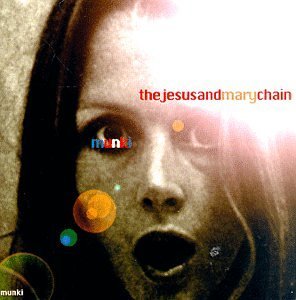
The Jesus and Mary Chain: Munki

Kim Kirkpatrick: I am here to praise a neglected release by The Jesus And Mary Chain—Munki, a CD anyone fond of noise, feedback, cutting lyrics, and general mayhem in music should own. After a general description of The Jesus And Mary Chain (JMC) and pointing out several fine re-releases, I will give you more details on Munki and a couple other suggested purchases.

Rhino and WEA have re-released five of The Jesus And Mary Chain’s CDs—Psychocandy, Darklands, Automatic, Honey's Dead, and Stoned and Dethroned. All of these reissues are DualDiscs*, with improved sound, extra tracks, and video material. I frequently think of purchasing all of them at once—clarity of sound is always on my mind with music I deem worthy of keeping. But I do have decent CDs of the ones I really like; I haven’t bought into DVD sound, and I am never going to sit down and watch the videos. But the main obstacle is my strong urge for more diversity in my collection. Other music and limited funds keep blocking my JMC re-purchase.

The Jesus and Mary Chain came from Scotland, formed in 1984 by Jim and William Reid. These two brothers had a stormy drug and alcohol-driven relationship during the fifteen years of the JMC. It was the live shows that first brought fame and attention to JMC. These shows were tense with anticipated violence, either from the Reid brothers or their fans. The brother’s antagonistic behavior towards their audience—not acknowledging them, playing with their backs to the crowd—created the tense environment. This “fuck you” attitude from the brothers led to the infamous violent rioting of their early days.

Stardust Remedy
I was just a teenage jesus freak
Got drunk on punk and then I found my feet
Tried to make a mad man sane
But I jumped aboard his psychopathic train
You gotta try some
You better try some
Velvet skies and the Velvet Underground
I was lost but now I know I'm found
I don't need no way rainy day
All I really need is Sister Ray


The duo of Jim and William Reid's music, and behavior, made it clear they were classic rock 'n' roll bad boys. The JMC created a powerful, uninhibited blending of The Velvet Underground and The Beach Boys. Add the blasting force of The Ramones and an equivalent to Phil Spector’s Wall Of Sound production, and you’ve got a unique combination of noise and pop sensibilities. The assault of the guitars, the physical waves of noise, combined with attitude-to-the-max vocals—all of this created a blissful, warped experience in the late eighties. They were an important catalyst for many a noisy pop band as well as the entire Shoegazing genre. The Jesus And Mary Chain sound can be heard in My Bloody Valentine, Swervedriver, Lush, Ride, The Stone Roses, etc. Overwhelming guitars, all fuzzed out and distorted, with a droning, mesmerizing noise, and always with an underlying melody.

Fizzy
Elvis lives and Bob Dylan is dead
And OJ's wife's crawling back from the dead
Love is great
Oh yeah love is good
And my best friend thinks that love is food
God is great
Oh yeah God is good
And my friend Ben thinks that beer is food


Religion, drugs, modern culture, and sin—the JMC repeatedly dealt with these subjects, sometimes combining them in one song. Their big, swirling sound, with feedback on the edge of exploding, the hypnotizing drone, the slinky melodies, all of these elements pointed to a religious or drug experience. Add the sexual, nasal tone of the vocals, the rapier wit of the lyrics, and you’ve got a decadent, addictive, sonic experience.

The lyrics above are from The Jesus And Mary Chain CD Munki. This was the last recording from The JMC, released in 1998 on Sub Pop. By this point the two brothers were hardly speaking—in fact each of them worked with the band separately for this final recording. This dichotomy between them is plainly expressed in the opening song from Jim Reid:

I Love Rock n Roll

Don't need money if you've got soul
And it don't matter if you're young or you're old
Well I don't worry what the people say
They say what they say
I go my own way
But that's me, yeah
It suits me, yeah
I love rock 'n' roll
I love what I'm do-ooing
I love rock 'n' roll
Gets me where I'm going

Don't need anyone
Don't need anything
Don't need anybody
I need rock 'n' roll


...And the closing song from William Reid:

I Hate Rock n Roll

I love the BBC
I love it when they're pissin' on me
And I love MTV
I love it when they're shittin' on me
I hate rock 'n' roll
And all these people with nothing to show
I hate rock 'n' roll
I hate it cause its fucks with my soul

Rock 'n' roll hates me
I hate you rock 'n' roll
I hate (rock 'n' roll hates me)


The tension between the brothers, and the toll of dealing with the music business, drove them to a final, creative peak in my opinion. The deluxe re-issue treatment has not been applied to Munki, perhaps because of contractual or label issues, or because it was never considered one of their better releases. For you this is a good thing—the CD is cheaper then the DualDisc reissues. And Munki is the fastest, nastiest, sonically most packed, most rock-n-roll-brilliant music The Jesus And Mary Chain ever released. My advice is to buy Munki now, and snag the reissues Honey’s Dead (minimal, classic JMC), and Stoned And Dethroned (primarily acoustic, shuffling and relaxed in a slow- to mid-paced Velvet Underground way). You need this noise!

CLICK HERE to buy this CD if you're in the U.S.

CLICK HERE to buy this CD if you're in Germany

CLICK HERE to buy this CD if you're in the U.K.

*Unlike regular CDs, DualDiscs are double-sided. One side contains standard CD audio. The other features DVD content, often including the album in higher-fidelity stereo or a 5.1-channel surround sound mix; lyrics, photos, and computer files; music videos, interviews, and documentaries; and anything else you might find on a regular DVD. Though DualDiscs are slightly thicker than ordinary discs, the DVD side should play in all DVD players, and the CD side should play in all CD players.


Mike Johnston: Just one little audiophool comment to add re JMC: to hear, crank it. This isn't music for in-the-office volume levels on tiny little computer speakers sitting there looking up at you innocently from either side of your monitor, or earbuds on the city bus, or fastidious little stereo systems with expensive two-way mini-monitors and glowing toobs. What JMC wants is a big nasty amp with lots 'n' lots of wattage and cheap tower speakers with vinyl on 'em whose sides flex when they play really loud. If you're not worried about your woofers, it ain't loud enough yet. Be thinking the home version of club volumes. Kim is willing to listen this way but I'm not sure how many others of us do. Without some volume, I'm not sure if JMC makes much sense.