1.06.2010

Ivy:Guestroom


Let's Go to Bed (The Cure)
Kite (Nick Hayward)
Say Goodbye (Papas Fritas)
Streets of Your Town (The Go-Betweens)
I Don't Know Why I Love You (House of Love)
Only a Fool Would Say That (Steeley Dan)
Digging Your Scene (Blow Monkeys)
L'Anamour (Serge Gainsborough)
Be My Baby (The Ronettes)
I Guess I'm Just a Little Too Sensitive (Orange Juice)

Kim Kirkpatrick:
10 cover versions from New York based Ivy's Guestroom released in 2002.
The trio Ivy originally formed in 1994, since then they have released several EPs/Singles, and half a dozen albums, the last one in 2005. I am eagerly awaiting a new release said to be available early this year. I have all their releases, but here I am going to focus on this release of cover songs. You can learn more about Ivy and their multitude of musical side trips at their site, which has a particularly pretty home page.

Guestroom reveals a lot about Ivy's diverse musical taste and influences. Listening to these ten tracks is interesting because of the comparisons you inevitably make to the originals. As a longtime Ivy listener it is especially interesting to hear them apply their skills to interpreting and making these songs their own. Ivy are excellent musicians, multi-instrumentalists, creative in the studio, you can count on an attention to detail both in their playing and recording. Guestroom has a lot of multi-tracking and effects, but none of these announce themselves. Ivy's recording techniques are subtle and the playing is always tastefully restrained and relaxed.

Along with the variety of instruments and effects on Guestroom, there are consistent elements from song to song. The multi-layered vocals are by Dominique Durand who has a soft, smooth style - many would compare her to Stereolab's Laetitia Sadier. The drumming sounds very live, steady and to the point, Ringo's playing came to mind. An acoustic guitar is usually the strong rhythmic base for the songs, with lots of over laid electric guitar work that I particularly enjoy. Often this involves the use of a wah pedal, always in a controlled, delicate manner, a technique I really appreciate hearing, given the excess you usually experience when guitarist step on these pedals.

Guestroom overall is a fine album, one of those rare ones you can safely play in a large group and know the majority of people will like it. Since these are cover versions you have the added fun of watching people slowly recognize the songs. Overall Guestroom works well on the surface but stands up to more attentive listening and repeat playing. Their are two songs that I tend to skip, personal taste prevents me from ever listening to a Steely Dan song again in this lifetime, and honestly Ivy does little to change the song, unlike most of the other tracks. The other track is The Cure's "Let's Go to Bed", Ivy does an excellent job covering the song and they have a video of it here. I just never liked this dance oriented song much, seemed like the downfall of The Cure to me.

The rest of the album I really enjoy, three songs in particular:

  • I love "Kite", written by Nick Hayward, perhaps best known for his Haircut 100 days. If you go to the link he has the original "Kite" recording, a truly beautiful song. Ivy doesn't radically change the song, it still rides on a nice mandolin line through out. This is a wonderful selection by Ivy, suits them perfectly, and the song really comes alive with Durand's vocals, taking on new meaning being sung by her.

  • I've always been fond of Orange Juice, going way back to their work on the Postcard label. Orange Juice's "I Guess I'm Just a Little Too Sensitive" is covered by Ivy with a light touch overall. Acoustic guitar, multi track vocals, excellent wah effects, with a slight build through the addition of organ, melodica, a touch of backwards guitar, and a nice finish with an understated guitar solo.

  • Ivy really dug in on The Ronette's "Be My Baby". The original is a famous Phil Spector Wall of Sound production, and a song he co-wrote as well. With that knowledge it is a treat to hear Ivy expand on the production of this classic, really stretch it out, and pump up it's atmospheric level. It starts with a Trip Hop drum pattern, joined by a looping and warped guitar line, drums that sound underwater, all leading up to huge echoing vocals. This song builds slowly, the atmosphere gets thicker and thicker with the addition of church organ, swirling background vocals, a sinister bass line, and some slow wah effects.


Alec Soth Video

Las Vegas Birthday Slideshow from Little Brown Mushroom on Vimeo.

1.05.2010

Nils Frahm - Wintermusik

Nils Frahm - Wintermusik by sonic pieces

Bob Burnett: I just discovered this album thanks to a Loscil tweet. The second cut "Tristana" fits nicely into the stark cold we're experiencing along the eastern seaboard. I'm always reminded of Robert Wyatt and Nico songs whenever I hear a harmonium or pump organ kick in.

Lady Day: The Complete Columbia Golden Years


Bob Burnett: A quick link to c60 tenured Prof. Mike Johnston's updated and comprehensive review of a really reasonably priced box set of Billie Holiday's Columbia releases circa 1933-44. Mike originally posted about the initial boxed set (as well as other Billie Holiday releases) on c60 a few years ago however a re-visit was in order since this less than $60 box became available.

1.03.2010

Keith Hudson:Flesh of My Skin Blood of My Blood


Kim Kirkpatrick: Flesh of My Skin Blood Of My Blood has an interesting history. This release is considered a reggae masterpiece, also the first true reggae album, not just a collection of singles released on an LP. It was released in England in 1974, but oddly was never released in Jamaica. It quickly went out of print and became a talked about obscurity that few reggae fans had heard. Thanks to the label Basic Channel, and it's superb reggae reissue sub label Basic Replay, this piece of reggae history surfaced again (and for the first time on CD) in 2004. This was Keith Hudson's solo debut, and thirty years later the intense lyrics (of the black experience and history), the haunting performance and production still create a vivid impression of skill, content, and blending of genres.

Keith Hudson grew up in Jamaica with classmates such as Bob Marley, Delroy Wilson and Ken Boothe, with whom he organized school concerts. In 1960, at the age of fourteen he released his first record, using musicians who would later join The Skatalites. He continued to produce instrumentals and popular Jamaican 45s for many famous reggae vocalists including: Ken Boothe, Delroy Wilson, John Holt, and U Roy. In 1970 he started singing on his own tracks, and by 1974 when he relocated to the United Kingdom he had stopped recording other vocalists all together. Hudson was signed to the Atra label and worked at Chalk Farm's Studios in London. His first release for the label - Flesh Of My Skin Blood Of My Blood was produced, written and arranged by Keith Hudson and released in 1974.

Hudson picked musicians who were the bedrock of 70s reggae, including: Augustus Pablo (harmonica, melodica), Earl Chinna Smith (guitar), Leroy Sibbles (bass), Santa Davis (drums), and Candi McKenzie (backing vocals). Count Ossie And The Mystic Revelation (who I reviewed back in January 2007) bring their percussion and congas to the first track. They set the mood on this unique instrumental track "Hunting", a blending of dread roots, blues, and Nyahbinghi rhythms. (See below for info on each musician)

While writing this post I listened through a DAC/headphone pre amp/ transport system with Sennheiser HD 800 headphones. This system tends to expose flaws, revealing brittle or harsh recordings, and bad production. I selected this release specifically to hear it more intimately through this system. I found Flesh Of My Skin Blood Of My Blood beautifully produced and recorded. The prime exception is the intro track mentioned above, with distorted bass and a bit of overlying noise. These kind of sonic flaws are nothing new to anyone who listens to early reggae (some Lee Perry cuts come to mind) and Flesh of My Skin Blood of My Blood overall provides 30+ minutes of rich, velvety lushness you can lose yourself in.

Of course fine production and skilled playing does not guarantee any music is worth your time. I was attracted to Hudson's serious, consistent message of consciousness (some refer to this as a concept album), and how the hard hitting band supported the lyrics with relaxed rhythms and drumming that persistently lags behind just so slightly. The musicians on this recording live up to their legendary status, the playing is warm and interwoven, the interaction is pure reggae at it's best. But the real importance of Flesh of My Skin Blood of My Blood is the smooth blending of musical genres Hudson created. Not only from track to track but within the songs. The title track (actually two cuts) is split between a vocal and an instrumental track. It has a pop element within the melody but also sways in classic roots reggae style, with rhythm and blues as the underlying center. "Testing My Faith" follows, with it's country and western harmonica and melody, blended with blues guitar and reggae beat. "Fight Your Revolution" skips along at a nice pace with beautiful layered vocals by Hudson and McKenzie, and two (left & right) soulful guitar tracks from Chinna Smith. "Darkest Night On A Wet Looking Road" was originally a single from 1971. On this version Hudson blends jazz and wah wah guitar tracks, reverb vocals, and an overall production worthy of Isaac Hayes. "Talk Some Sense (Gamma Ray)" is classic roots reggae along the lines of early Bob Marley and The Wailers. "Treasures of The World" is lover's rock based, a bit heavy on the synth keyboard, but with particularly nice singing by Candi McKenzie. "My Nocturne" is an instrumental, with organ and synth keyboards laying down an infectiousness melody, and excellent rhythm and wah guitar playing, all in a blues/reggae package. "I Shall Be Released" is plain weird, with keyboards intruding on the melody, conga and tambourine beats, and limited vocal presentation from Hudson. "No Friend of Mine" is a ballad, countered by blues guitar and conga percussion. "Stabiliser" closes out this release, another instrumental which features a thick organ sound, melodica, and guitar. It is a fitting closing with it's blending and blurring of multiple genres and heavy atmosphere.

Because of the blended genres and the blues foundation of much of the playing, I think this release would be of interest to even the casual reggae listener. For me in addition to all the praise above I found a couple of other elements on this release that were particularly satisfying. Earl Chinna Smith's playing is front stage and featured on Flesh Of My Skin Blood Of My Blood. Chinna is THE guitarist of classic reggae, it is impossible to imagine the prime years of this genre without his playing. He has always been a favorite guitarist of mine, and I have yearned for decades to here him featured and eventually I decided such a recording did not exist. Even his few solo releases did not feature his diverse skills as wonderfully exposed as on this release. I also spent a few years and dollars searching for more reggae female vocalists, brought upon after hearing the I Threes live, Bob Marley and The Wailers back up singers. In general, I was disappointed by what I found, until hearing Candi McKenzie's beautiful and significant contribution on Flesh of My Skin Blood of My Blood.

*
Augustus Pablo
Essential roots/dub reggae producer, and musician most famous for featuring the melodica on such classic recordings as: This Is Augustus Pablo, King Tubby Meets Rockers Uptown, and East Of The River Nile.

Earl Chinna Smith
He appears on dozens of CDs I own, such as: Abbyssinians, Prince Alla, Horace Andy, Dennis Brown, Burning Spear, Cornell Campbell, Don Carlos, Johnny Clarke, Mikey Dread, Earth and Stone, Phillip Frazer, I Roy, King Tubby, Barrington Levy, Ras Michael & Sons Of Negus, Roots Radics, Mighty Diamonds, Freddie McGregor, Hugh Mundell, Augustus Pablo, Lee Perry, Prince Far I, Prince Jammy, Michael Prophet, Scientist, Sly and Robbie, Bim Sherman, Linval Thompson, Bob Marley and The Wailers, Bunny Wailer, and Delroy Wilson.

Leroy Sibbles
Lead singer for the rock steady Heptones, bassist for the Studio One label, also worked with Lee Perry, and Lloyd "Bullwackie" Barnes founder of the Wackie's label. A label significantly reissued by Basic replay, without them I would never have heard Bullwackie's work.


Santa Davis
Original drummer for Roots Radics and Channel One Studio.

Candi McKenzie
She also appeared on the classic Heart Of the Congos by The Congos and Exodus by Bob Marley and The Wailers.

Fluid Radio: Top 10 of 2009

09'S Top 10 by Fluid Radio on Mixcloud


Fluid Radio is an online "electroacoustic frequencies" music source. They describe themselves as the "best in experimental frequencies allowing listeners, artists, producers and promoters to be completely involved in the growth and direction of the station. Focusing on experimental genres, we aim to provide a space to share in the creative process and spread the experience of inner exploration through musical expression. The playlist is diverse, encompassing Ambient, Modern Classical, Experimental Acoustic, Folk and Abstract sounds."They've been a fruitful website for me this year. I discovered several artists--most notably Solo Andata, Danny Norbury and (I think...)Loscil. They just compiled their Top 10 for 2009 and created a 45 minute streaming compilation featuring their choices. I've posted the link above and hope you get a chance to listen to it.

1.02.2010

2010: A lot of Ben Perowsky

Photo by Leah Meyerhoff

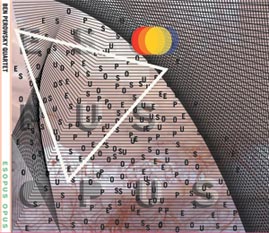
Bob Burnett: 2010 has started off well thanks to Ben Perowsky. Esopus Opus and El Destructo Vol. II: Moodswing Orchestra to be exact. Two vastly different outings offering the same result: delightful listening pleasure.

Ben Perowsky is a drummer who in addition to fronting his own groups has found time for a diversity of recording sessions over the years in jazz, R&B, pop/rock, experimental with people such as James Moody, Rickie Lee Jones, Roy Ayers, Miles Davis alums, Dave Douglas and The Lounge Lizards. Let's take on Esopus Opus first: it's a Ben Perowsky Quartet release featuring in addition to Ben on drums, Chris Speed (clarinet/tenor--various Tzadik albums), Ted Reichman (accordion/piano--I have him in a duet release with Anthony Braxton) and Drew Gress. (bass--also on John Surman's Brewster's Rooster reviewed earlier this month) In conjunction with terrific original material the quartet covers The Beatles Flying as well as Within/Without You. Jimi Hendrix's Manic Depression also gets a rework as does Hermeto Pascoal's Nem Um Talvez. There's an exuberance in play here that is captivating for rock listeners as well as "out" jazz people. The playing is tight, open and incredibly well recorded at Brooklyn Recording by Andy Taub. Perowsky's drums have "color", vibrancy and drive--always pushing the music ahead. I'm fondly reminded of a number of releases--Charlie Haden's Ballad of the Fallen, any number of Paul Motian's albums, Bill Frisell's Have A Little Faith come to mind off the top of my head.

The other album is El Destructo Volume II: Moodswing Orchestra, an effort that features a wide range of vocalists/groups (Joan As A Policewoman, Elysian Fields and Bebel Gilberto, for example) as well as an array of NYC's incredible musicians. Moodswing Orchestra is more ethereal and dub soundscape-like than the Quartet. I'm reminded of Hal Wilner-produced projects such as the Mingus tribute Weird Nightmare. There's a wide range of sonics--Perowsky's drums along with woodwinds, trumpets, bass, sound effects, snap-crackling vinyl, theremin, tuba and "air". Moodswing Orchestra is an album that makes me wish I was still on the radio someplace; I'd just put it on and watch the curious calls come in. As a matter of fact, my 13 year old was just lying on the bed next to where I was typing while listening to Moodswing. Now I hear her upstairs playing her drum kit.

I can only hope a young Ben Perowsky is in the making.